Walnut has earned its reputation as the benchmark wood for luxury charcuterie boards, and once you understand why, it becomes obvious why so many premium serving pieces default to this single species over dozens of other available hardwoods. This guide walks through everything worth knowing before purchasing a custom walnut charcuterie board, from grain types to engraving options to practical sizing advice.
Why Walnut Stands Out Among Hardwoods
Black walnut develops a rich, naturally dark brown tone without the need for staining, which is part of what gives it such a distinctive, upscale appearance compared to lighter woods. Its grain pattern tends to be elegant rather than busy, which means a walnut board photographs and displays beautifully whether it is sitting on a kitchen island or being used during a dinner party.
Beyond appearance, walnut is also dimensionally stable, meaning it resists warping and cracking better than many alternative species when properly cared for. This combination of beauty and durability is exactly why walnut remains the most requested wood for custom charcuterie boards across the industry.
End Grain vs Edge Grain Walnut Boards
Understanding the difference between end grain and edge grain construction is one of the most useful things a buyer can know before placing an order.
End Grain Walnut Boards
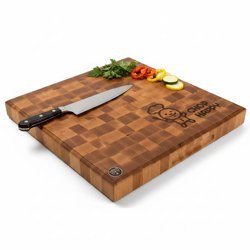 End grain construction orients the wood fibers vertically, which allows a knife blade to pass between the fibers rather than cutting across them. This reduces visible knife marks and extends the life of the board significantly, which is why end grain construction is generally recommended for anyone planning to use the board for actual food preparation rather than display only.
Edge Grain Walnut Boards
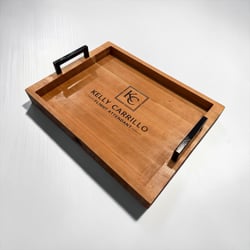 Edge grain boards showcase the long, flowing grain pattern of the wood and tend to be slightly lighter in weight. These are often preferred for serving boards, charcuterie presentation, and decorative use where heavy knife work is not the primary purpose.
Personalizing a Walnut Board
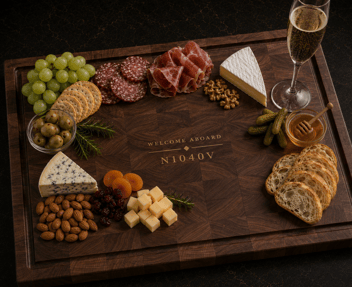
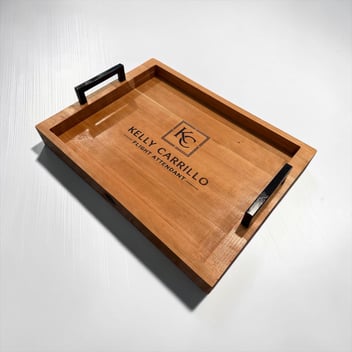
Walnut machines exceptionally well, which makes it one of the best surfaces available for engraving, monogramming, or inlay work. A common and visually striking approach pairs dark walnut with a lighter contrasting wood such as maple for the engraved design or text, since the brightness of the maple makes the personalization easy to read against the dark walnut background.
- Names, initials, or monograms for personal gifts
- Wedding dates or family names for celebratory pieces
- Company logos or aircraft tail numbers for corporate and aviation gifts
- Custom artwork or silhouettes for a more decorative statement piece
- Hand wash only, never place in a dishwasher
- Dry the board immediately after washing rather than letting it air dry
- Apply food safe board oil periodically to keep the wood nourished
- Avoid prolonged exposure to standing water or extended soaking
- Choosing a board too small for the intended use, then finding it impractical for actual entertaining
- Skipping the design proof stage and assuming the engraving will look a certain way without confirming it first
- Underestimating production time and ordering too close to a gifting deadline
- Choosing a wood purely for trend reasons rather than how it will actually look against the planned engraving or inlay
Prop & Pine uses true hardwood inlay rather than surface printing for these designs, meaning the personalization becomes a permanent structural part of the board. The full range of customization options, wood pairings, and sizes can be browsed on the Products page.
Choosing the Right Size
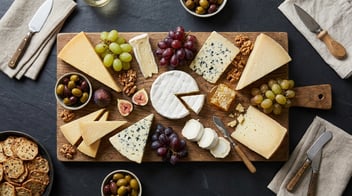
Board size should match how it will actually be used. A smaller board, often suited to two or three people, works well as a personal gift or an everyday serving piece. Larger boards designed for entertaining groups need enough surface area to hold a varied spread of meats, cheeses, crackers, and accompaniments without feeling cramped. Thinking through the most likely use case before ordering helps avoid ending up with a beautiful board that is impractical for its intended purpose.
Caring for a Walnut Board
Proper care extends the life of a walnut board considerably and helps the wood develop a deeper, richer patina over time. The core habits are simple but important.
Following these basic steps will keep a quality walnut board looking excellent for decades, which is part of what makes it such a worthwhile investment compared to lower cost alternatives that tend to crack or warp within a year or two of regular use.
Walnut Compared to Other Popular Hardwoods
While walnut remains the most popular choice, it is worth understanding how it compares to other commonly used species. Maple offers a brighter, more contemporary look and excellent durability, making it a favorite for cutting boards specifically. Mahogany delivers a similarly luxurious feel to walnut but with a warmer reddish tone. Cherry develops a beautiful patina as it ages, often deepening in color over the years. Each of these woods has its place, but walnut continues to be the default recommendation for buyers seeking the classic, upscale appearance most associated with premium charcuterie boards.
Common Mistakes to Avoid When Buying a Custom Board
A few avoidable mistakes tend to show up repeatedly among first time buyers of custom walnut boards, and knowing about them ahead of time helps avoid disappointment after the order arrives.
Taking a few extra minutes to think through sizing, timing, and the design proof avoids the vast majority of issues buyers run into with custom orders.
Getting a Custom Walnut Board Made
The process for ordering a custom walnut board typically starts with selecting a size and deciding whether personalization, such as engraving or an inlay, should be included. A digital design proof is provided before production begins for any personalized piece, ensuring the final layout and wording are confirmed ahead of time rather than discovered after the fact. Full details on the craftsmanship process, including hardwood selection and finishing, are available on the Process page, and a complimentary custom design can be requested through the Request a Design page.
Frequently Asked Questions
Why is walnut a popular choice for charcuterie boards?
Walnut is popular for charcuterie boards because of its rich natural brown color, elegant grain pattern, and the fact that it develops its deep tone naturally without requiring stain.
What is the difference between end grain and edge grain walnut boards?
End grain boards expose the vertical wood fibers, making them more durable and better suited for cutting, while edge grain boards showcase the long grain pattern and are typically used for serving and display.
Can a walnut charcuterie board be personalized with engraving?
Yes, walnut machines very well, which makes it an excellent surface for personalized engraving, monograms, names, or inlaid designs using a contrasting lighter wood such as maple.